This blog was written by Ravneet Kaur. Edited by Jax Dowdell.
What happens after you’re seen?
For many trans, non-binary, and Two-Spirit people, visibility can mean dignity, recognition, and connection.
But it can also mean being questioned, misunderstood, or unsafe.
Being Seen but Not Safe: The Reality Behind Trans Day of Visibility is a critical theme that underscores the necessity for continued advocacy and support within the community.
Moreover, it serves as a reminder that awareness alone does not equate to personal safety.
True visibility requires more than acknowledgment – it requires protection, respect, and the ability to exist without fear. It demands tangible safety measures. It highlights both the progress and pitfalls faced by trans individuals in the struggle for acceptance.
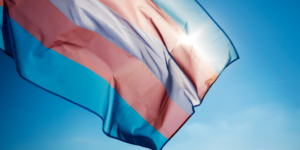
That tension is at the core of International Transgender Day of Visibility (learn more) – a global day created in 2009 (source) to celebrate trans lives while raising awareness about the discrimination that still exists.
The ongoing discussion about Seen, But Still Not Safe is crucial for understanding the nuances of safety in visibility.
In reflecting we must consider the systemic issues that influence safety.
Because the reality is simple:
being seen and being safe are still not the same thing.
Visibility Is Powerful – But It’s Not Neutral
Trans Day of Visibility exists to celebrate trans, non-binary, and Two-Spirit people while also recognizing the challenges they continue to face.
Across Canada, more people are living openly and authentically. That visibility matters – it helps people feel less alone, less hidden, and more able to exist as themselves. But it also comes with new challenges.
Visibility in Canada: Progress and Pushback
Across Canada, more people are living openly and authentically. That visibility matters. It helps people feel less alone, less hidden, and more connected to community.
But visibility doesn’t exist in a vacuum.
In Calgary and across Alberta, conversations around gender identity are becoming more visible but not always more supportive. Public discourse is increasingly shaped by misinformation and online hostility.
According to Egale Canada, there has been a rise in digital hate targeting trans and gender-diverse communities. (learn more)
So while visibility can create connection – it can also increase exposure.
In Canada, transgender individuals continue to face alarmingly high rates of gender-based violence. According to Women and Gender Equality Canada (WAGE), 59% of transgender and gender-diverse people experience violent victimization, starkly contrasted with 37% of their cisgender counterparts.
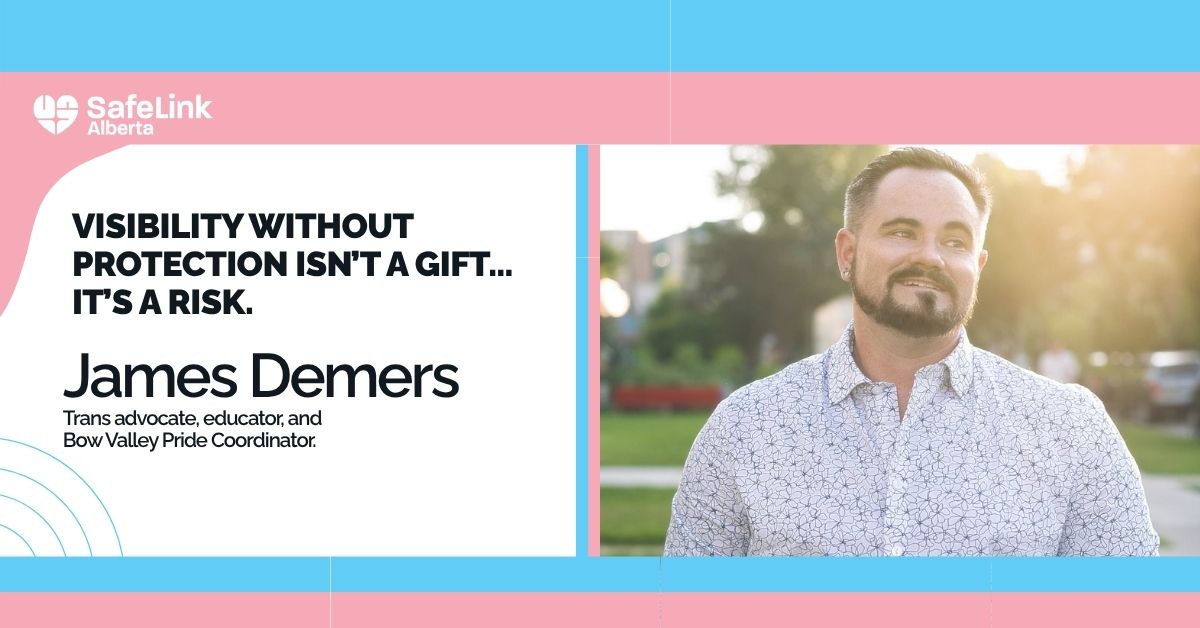
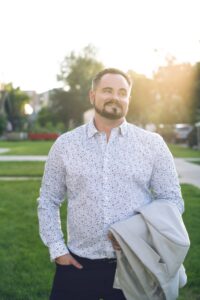
Meet James Demers: A Voice from Community
To ground this conversation in lived experience, SafeLink Alberta partnered with James Demers.
Visibility is Not Enough: The Ongoing Struggle for Safety At SafeLink Alberta, we recognize that visibility, while important, does not equate to safety for the transgender community. The celebration of Trans Day of Visibility serves as a vital reminder of the ongoing challenges that individuals face daily. Until society not only acknowledges but actively addresses these disparities, the journey toward genuine safety and acceptance remains incomplete. It is imperative that we continue to advocate for substantial changes that foster true inclusion and protection for all.
James is a trans man, advocate, educator, and creator. He is the founder of the drag troupe Fake Mustaches, former Executive Director of the Fairy Tales Queer Film Festival, and currently serves as the Bow Valley Pride Coordinator.
His work sits at the intersection of art, advocacy, and community-building, making space for gender-diverse people to be seen not just in struggle, but in creativity, leadership, and everyday life.
And his reflection on visibility is clear:
“We’re often told that visibility is the goal – that if people see us, they’ll understand us… but in a climate where our lives are being funneled through a lens of misinformation, our visibility is often weaponized.”
That word – weaponized changes how we understand visibility.
Watch full video here –https://youtu.be/-5CfzgUB43Q
Visibility Without Protection Is a Risk
For many, visibility is not a moment. It’s a constant calculation.
As James explains:
“Visibility without protection isn’t a gift… it’s a risk.”
“Gender-diverse people always know where the exits are in every room because we need to.”
This isn’t about fear, it’s about awareness shaped by lived experience.
It shows up in everyday decisions:
- Walking into a rec centre
- Entering a public washroom
- Starting a new job
- Going on a first date
“It’s the calculation that we make before walking into a rec center… a library… catching an Uber… interviewing for a new job.”
These moments rarely make headlines.
But they define what visibility actually feels like.
“Gender-diverse people always know where the exits are in every room because we need to.”
James
When Policy Debates Become Personal
In Alberta, recent policy changes affecting transgender youth particularly around healthcare and participation in school life have raised national and international concern.
But beyond policy language, the impact is deeply human:
- A young person unsure if they’ll still be able to access care
- A student questioning whether school is a safe place
- Families navigating uncertainty and fear
These aren’t abstract issues. They are lived realities.
And for many, visibility in this context doesn’t feel empowering it feels uncertain.
The Small Things That Define Safety
Safety is often built or broken in small, everyday interactions.
Using correct pronouns.
Having access to inclusive washrooms.
Being acknowledged without question.
These are often framed as minor details. They are not.
As James reminds us, visibility at its best is grounded in simple, human moments:
As we move forward from seen, but still not safe, let us remember the importance of support.
“It’s being called by your name.”
“It’s feeling safe at a dinner table.”
“It’s the quiet peace of feeling at home in your own body.”
That’s what safety looks like in practice.
Why Trans Day of Visibility Exists
Trans Day of Visibility was created by Rachel Crandall Crocker in 2009 to shift the narrative.
Not away from struggle but beyond it. To ensure trans people are seen not only through loss or discrimination, but through life, contribution, and joy.
As James reminds us:
“Because we have always been here.”
And not just present – but shaping the world in meaningful ways.
From innovators to artists, trans people have long contributed to science, culture, and society. As James highlights, figures like Wendy Carlos, who transformed modern music, and Lynn Conway, whose work helped shape modern computing, are part of that legacy.
These stories matter. Because visibility isn’t just about being seen in moments of struggle – it’s about being recognized in moments of brilliance, leadership, and impact.
From Awareness to Action: What Allyship Really Means
Visibility alone does not create safety. Action does. James is clear about the role of allies:
“For allies, it’s about showing up—loudly, clearly, and consistently.”
“It is active and it is a marathon, not a sprint.”
That means:
These lessons from Visibility Without Safety must guide our actions and policies moving forward.
While we celebrate visibility, the themes of Seen, But Still Not Safe are crucial to heed.
- Challenging harmful language
- Interrupting misinformation
- Supporting inclusive policies
- Creating safer spaces in everyday environments
Because without action, visibility can leave people exposed.
Be Part of Creating Safer Spaces
Safety doesn’t happen by chance – it’s built through care, intention, and support. At SafeLink Alberta, your support helps turn awareness into action. Support this work: https://safelinkalberta.ca/donate/
What This Means at SafeLink Alberta
At SafeLink Alberta, we see these realities every day. We see how meaningful it is when people are treated with dignity – not just in words, but in action. We see how small moments can reduce isolation and build connection. And we also see where gaps still exist. Because building safer communities takes more than awareness – it takes consistent, collective effort.
SafeLink Alberta: Supporting Transgender Communities
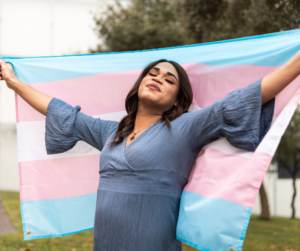
At SafeLink Alberta, we’re committed to making sure trans and gender-diverse individuals can access the care, resources, and support they need to feel safe and supported.
Our work includes:
Let the gap between visibility and safety serve as a catalyst for ongoing dialogue and progress.
Accessible, affirming outreach and risk-reduction programs
We deliver services that meet people where they’re at, offering information, supplies, and support without judgment.
Safe spaces and peer connection
We create welcoming environments where transgender community members can connect, share experiences, and access peer support when they need it most.
Non judgmental and confidential STI Testing
Testing services are available at our Calgary and Medicine Hat offices, offering low-barrier, confidential, and non-judgmental screening for syphilis, HIV, hepatitis C, chlamydia, and gonorrhea. We provide treatment for syphilis, chlamydia, and gonorrhea, and offer referrals for HIV and hepatitis C care.
The Reality We Can’t Ignore
On Trans Day of Visibility, there will be celebration. And that matters.
But at the same time:
- Some people will still hesitate before correcting a pronoun
- Some will still assess safety before entering a space
- Some will still decide how much of themselves they can share
And as James reminds us:
“Visibility without protection isn’t a gift… it’s a risk.”
Visibility is not a finish line. It’s a starting point.
The goal is not just to be seen.
It’s to live fully, safely, and without fear.
And until safety catches up with visibility –
there is still work to do.
Need Support?
Thus, when we consider Being Seen but Not Safe: The Reality Behind Trans Day of Visibility, we are reminded of the resilience of the trans community.
We must continue to fight for the ideals represented in Being Seen but Not Safe: The Reality Behind Trans Day of Visibility. As we delve deeper into this harsh reality, the need for inclusive policies becomes increasingly apparent.
Keep in Touch
Trans Day of Visibility is observed annually on March 31. It celebrates trans, non-binary, and Two-Spirit people while raising awareness about the discrimination and barriers they continue to face.
Visibility helps reduce stigma, build understanding, and create a sense of belonging. In Canada, it allows more people to live openly and access community support—but visibility alone does not guarantee safety.
No. While visibility can create connection and recognition, it can also increase exposure to discrimination, harassment, or violence. Many trans people still navigate safety concerns in everyday spaces.
In Alberta, challenges include public misinformation, policy changes affecting youth, and barriers to safe access in schools, healthcare, and public spaces. These issues can directly impact wellbeing and sense of safety.
Support can include:
Respecting names and pronouns
Challenging harmful language or misinformation
Supporting inclusive policies
Creating safer spaces in workplaces, schools, and communities
Consistent, everyday actions make a meaningful difference.
James Demers is a trans advocate, educator, and community leader. He is the founder of the drag troupe Fake Mustaches, former Executive Director of the Fairy Tales Queer Film Festival, and currently the Bow Valley Pride Coordinator.
SafeLink Alberta provides accessible, non-judgmental services including outreach, education, and health support. Their work focuses on reducing barriers, building connection, and supporting safer, healthier communities.