spread information about HIV transmission and debunking misconceptions tied to it.
This blog post has been written by Chinedu Anyanyo, Leanna-Kai David, Niki Loewen, Ugochi Mgbahurike, Jasmine Ochoa-Alvarenga and Kenneth Parazo. Edited by SafeLink staff Eddy Robinson & Ravneet Kaur.
Welcome to our blog post. We are nursing students from Mount Royal University partnering with SafeLink Alberta. We aim to spread information about HIV transmission and debunking misconceptions tied to it. We will tackle the myths that lead to stigma including the misconceptions that HIV only affects certain groups which is untrue.
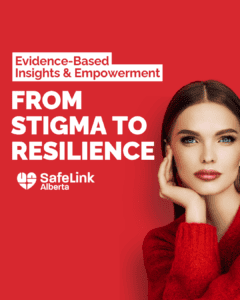
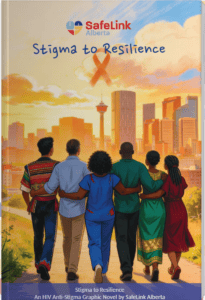
We also highlight a powerful message known as U=U (Undetectable=Untransmittable) which means that people living with HIV with an undetectable viral load cannot transmit the virus to another person. We will also highlight SafeLink’s graphic novel, “Stigma to resilience” that references real stories of individuals that have HIV and how they navigate through it. Our goal is to provide you with evidence-based information that will help you make better choices and approach this topic with more understanding and empathy.
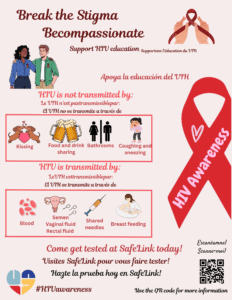
HIV can be spread through 5 bodily fluids including:
Blood
Rectal fluid
Vaginal fluid
Semen
Breast milk
The common ways to spread HIV is by:
Condomless vaginal sex
Condomless anal sex
Sharing needles (although the research on this is limited)
HIV could be passed by a mother to their child in pregnancy through:
Placenta blood exchange
Labor and delivery
Breastfeeding
However, there are ways to protect a baby from getting HIV. Pregnant people can take medications that would lower the risk of passing the infection to the baby. A baby should also be given HIV medicines for the first 4 to 6 weeks of their life. Talk to your healthcare provider for further information.
HIV can’t be spread through:
Saliva
Sweat
Tears
Insects such as mosquitos or ticks
HIV is also not passed by:
Handshakes
Hugging
Sharing toilets, dishes, or drinking fountains.
Facts or Fiction
Fiction: HIV is only a concern for members of the LGBTQIA+ community.
FACT: Anyone can get HIV, not just the members of LGBTQIA+.
FACT: There has been an increase in treatments available for people living with HIV as medicine advances. Through treatments, most people with HIV can live long, happy lives, with little to no side effects from the medication.
Fiction: You will get HIV when you have sex with someone who has HIV.
FACT: The risk of HIV transmission depends on many things, but most significant is the viral load of the HIV+ person. The viral load is how much of the virus is in the blood, with a suppressed viral load there is not enough of the virus to transmit it. Prevention methods like condoms and preventative medication like PrEP are further protections an HIV- person can use to reduce the risk of contracting HIV if you are having sex with someone who is HIV positive. _____________________________________________________________________________
Fiction: People with HIV can always transmit the virus, even with treatments.
FACT: People with HIV who take medications have little to no chances of spreading it. Remember U=U (undetectable=untransmittable)? This means someone who takes their medication everyday, can have condomless sex and not pass on HIV. However, using protections such as condoms will further decrease your chance of getting HIV. ————————————————————
Fiction: HIV can be passed through kissing and saliva.
FACT: There is not enough of the virus in saliva to transmit it.
——————————————————————————————————————
Speaking of Breaking Stigma…. Have You Seen Our Graphic Novel
SafeLink created a graphic novel called Stigma to Resilience, that tells real stories of people living with HIV, some from different countries immigrating to Canada. The stories include experiences of stigma, homophobia, issues with disclosing HIV status, and the discrimination faced from society, family, and even healthcare providers. The graphic novel ultimately highlights the strength and resilience of these individuals and amplifies their voices to advocate for the other people navigating HIV and the importance of decreasing the stigma surrounding HIV/AIDS.
You can be part of this legacy.
Become a monthly donor today to help us keep showing up for those aging with HIV, for people newly diagnosed, and for every community impacted by stigma and inequity. Your support sustains life-saving programs rooted in dignity, inclusion, and compassion. You could also encourage people around you to get tested for Sexually Transmitted and Blood-borne infections as early diagnosis saves lives.
SafeLink Alberta is a non-profit organization dedicated to supporting underserved communities across Southern Alberta. Since 1983, they’ve worked to reduce the harms associated with sexual activity and substance use through education, compassionate care, and non-judgmental services.
They provide HIV, hepatitis C, and STI testing, safer sex supplies, peer support, outreach, and referrals prioritizing people most affected by stigma and systemic barriers.
Join us in carrying this work forward. Become a monthly donor and help us continue to support long-term survivors, fight stigma, and build healthier communities together.