This blog was written by Betiel Mario, a SafeLink Alberta practicum student. Edited by Alisha Ostberg.
Table of Contents
Overdose Prevention
When I was asked to write a blog about overdose prevention, I’ll be honest—I wasn’t sure where to start. I didn’t know much about the topic, and I wasn’t sure I had the right words. But the more I read, the more I realized just how important this conversation is.
So, this isn’t coming from an expert. This is just me, learning as I go, and sharing what I’ve discovered. Because overdose is a real issue that’s affecting people every day, and the more we talk about it, the more lives we can help save.
I didn’t grow up talking about overdose. I didn’t think it had anything to do with me. This is my first time writing about overdose, and I am still learning—but I hope by writing this, someone else might pause and learn something too.
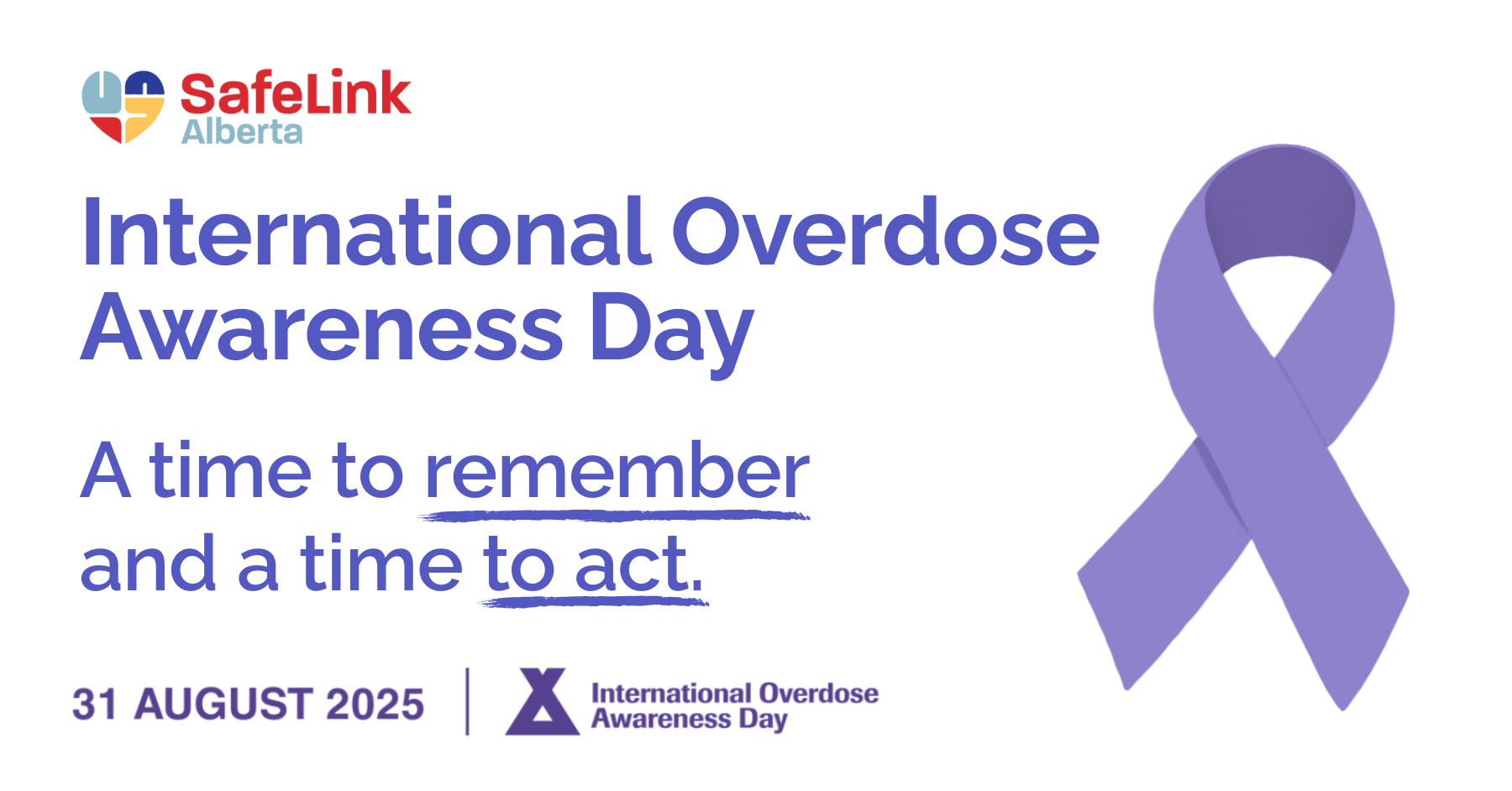
Overdose is a public health crisis affecting millions of individuals and families around the world. In many cases, these tragedies are preventable. This day is not just about raising awareness; it’s also a call to action—to improve education, reduce stigma, and push for better access to harm reduction resources, mental health care, and treatment services.
Breaking the Stigma
One of the biggest barriers to overdose prevention is stigma. People who use drugs are often marginalized, judged, and denied the compassion and medical care they deserve. On this day, we reaffirm the belief that every life is valuable and that addiction is not a moral failing, but a complex health issue.
Talking openly about drug use, addiction, and overdose doesn’t encourage drug use—it encourages safety, honesty, and healing.
About Language
Editor’s Note:
It’s important to pause here and reflect on the language we use when talking about substance use. The word “overdose” is often assumed to mean someone has taken drugs on purpose to harm themselves, when in fact most hospitalizations and deaths are unintentional. Because so much of Canada’s unregulated drug supply—especially in Alberta—is contaminated with fentanyl, many experts use the term “toxic drug supply” instead.
Another helpful shift is using the word “poisoning.” Just as we say “alcohol poisoning” when someone drinks too much, this language recognizes that many people don’t know what’s in their drugs. Choosing words like “toxic supply” or “poisoning” helps reduce stigma and better reflects the reality of the crisis.
A Message of Hope
Overdose Prevention Day is as much about hope as it is about honouring loss. It’s a reminder that by working together with compassion, knowledge, and courage, we can prevent overdose deaths and support healing for individuals and families affected by substance use.
What is often overlooked is that overdose is something a lot of people don’t want to talk about. It’s uncomfortable. It’s painful to face. But the truth is, overdose is claiming lives every day, and many of those deaths could be prevented with the right tools, education, and support.
We All Have a Role to Play
We all have a role to play, even if it’s just starting a conversation, sharing a post, or being there for someone who’s struggling. Overdose prevention isn’t just about medicine—it’s about awareness, understanding, and care.
I’ve read stories from people who say they’re lucky to be alive after a severe overdose. Those words might sound simple, but they carry a lifetime of pain, struggle, and hope behind them—and they remind us why this conversation matters so much.
Thank You for Reading
Thanks for taking the time to read this. And let’s keep looking for each other.
Learn More About Harm Reduction and Substance Use
If you’re interested in learning more, SafeLink Alberta offers a course called Harm Reduction, Sex, Drugs, and Human Rights. This in-person training provides a comprehensive look at the evolution of harm reduction in Canada, exploring the history of drug laws, the development of evidence-based practices, and the impact of these policies on key populations. Designed for professionals seeking a certificate, the session combines practical application, cultural competency, and opportunities for interactive learning.